




Burning eyes: what to do first, and when to see an eye doctor
A practical order of operations for that hot, stinging feeling, plus the specific signs that mean you should stop self-treating and get examined. Guidance informed by our network of over 5,000 eye care professionals.
Shop eye drops When to get checkedQuick answer
Start with a preservative-free lubricating drop, used on a schedule rather than only when the burn gets bad. Give it two weeks of consistent use while you also cut the obvious triggers, which are usually screen time, air blowing at your face, and sleeping in a dry room. If burning is still there after two weeks, or if it comes with light sensitivity, blurred vision that does not clear when you blink, or discharge, book an eye exam instead of trying another drop.
Key takeaways
- Burning is a symptom, not a diagnosis. The same feeling comes from dryness, lid inflammation, allergy, and irritants, and each one has a different fix.
- Watery eyes do not rule out dry eye. Reflex tearing is a common response to a dry, irritated surface.
- If you use drops more than about four times a day, choose preservative-free.
- Redness-relief drops are not a treatment for burning, and daily use can leave eyes redder than before.
- Two weeks of consistent care is the decision point. Better means keep going. No change means get examined.
- Light sensitivity, vision changes, discharge, or pain are reasons to be seen promptly, not to keep experimenting.
Step one: work out which burn you have
Before you buy anything, spend a day noticing when the burning shows up. The timing narrows the cause faster than any product will.
Worst at the end of the day
Classic pattern for screen-related dryness. Blink rate drops sharply during focused near work, so the tear film thins out over hours and the surface gets exposed.
Worst on waking
Points toward overnight exposure or lid margin inflammation. Common with CPAP mask leak, a ceiling fan, or lids that do not fully seal during sleep.
Burning plus itching
Itch is the signature of allergy. Burning alone leans dry eye, while burning with a strong urge to rub leans allergic, and the two often overlap seasonally.
Burning with crusting or flaking
Suggests the lid margin rather than the eye surface. This one usually responds to lid hygiene rather than to more drops.
The Tear Film and Ocular Surface Society Dry Eye Workshop III report (TFOS DEWS III, published in the American Journal of Ophthalmology in 2025) defines dry eye as a multifactorial disease of the ocular surface characterized by a loss of homeostasis of the tear film. It widens the 2017 view, which centered on the tear film, to take in the ocular surface itself. That is why a single product rarely resolves burning on its own.
Step two: fix the environment before you buy more
These cost nothing, and they often do more than a second bottle of drops.
Screen work
Lower the monitor below eye level and take a real blink break every twenty minutes. Looking down covers more of the eye than looking up.
CPAP
Air leaking from the top of the mask crosses your eyes all night. A refit often fixes a morning burn that drops cannot reach.
Contact lenses
Lenses sit in the tear film and compete with it. Try shorter wear days before deciding the drops failed.
Makeup and travel
Liner inside the lash line blocks the oil glands that slow evaporation. Cabin air is very dry, so dose before takeoff.
Step three: match a drop to the slot in your day
Most people do better choosing by when they need relief than by comparing ingredient lists. Here is how the three common slots break down.
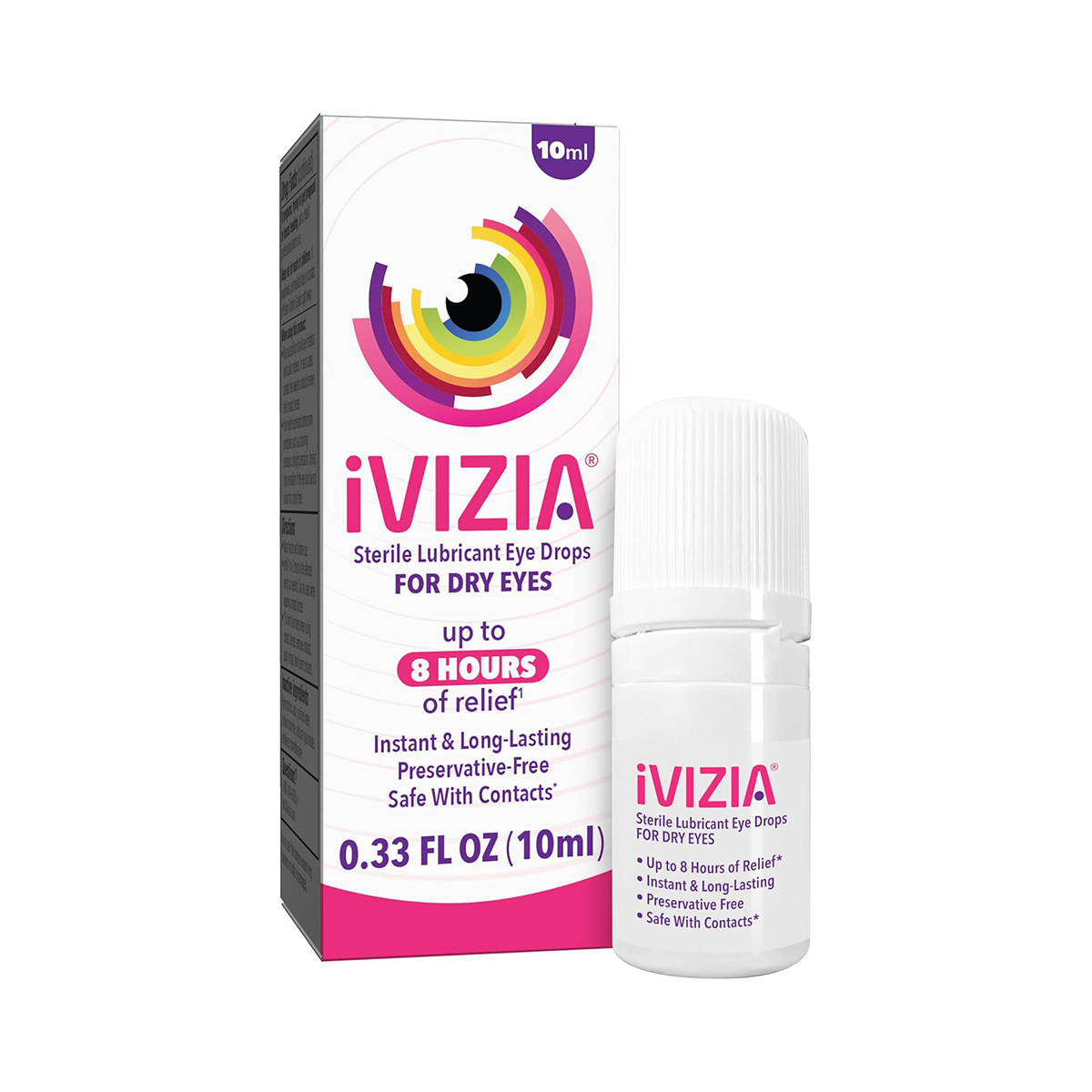
iVIZIA preservative-free lubricant eye drops, 10ml bottle
A multi-dose bottle suits people dosing several times a day who do not want to carry vials. Preservative-free and labeled contact lens friendly.
View product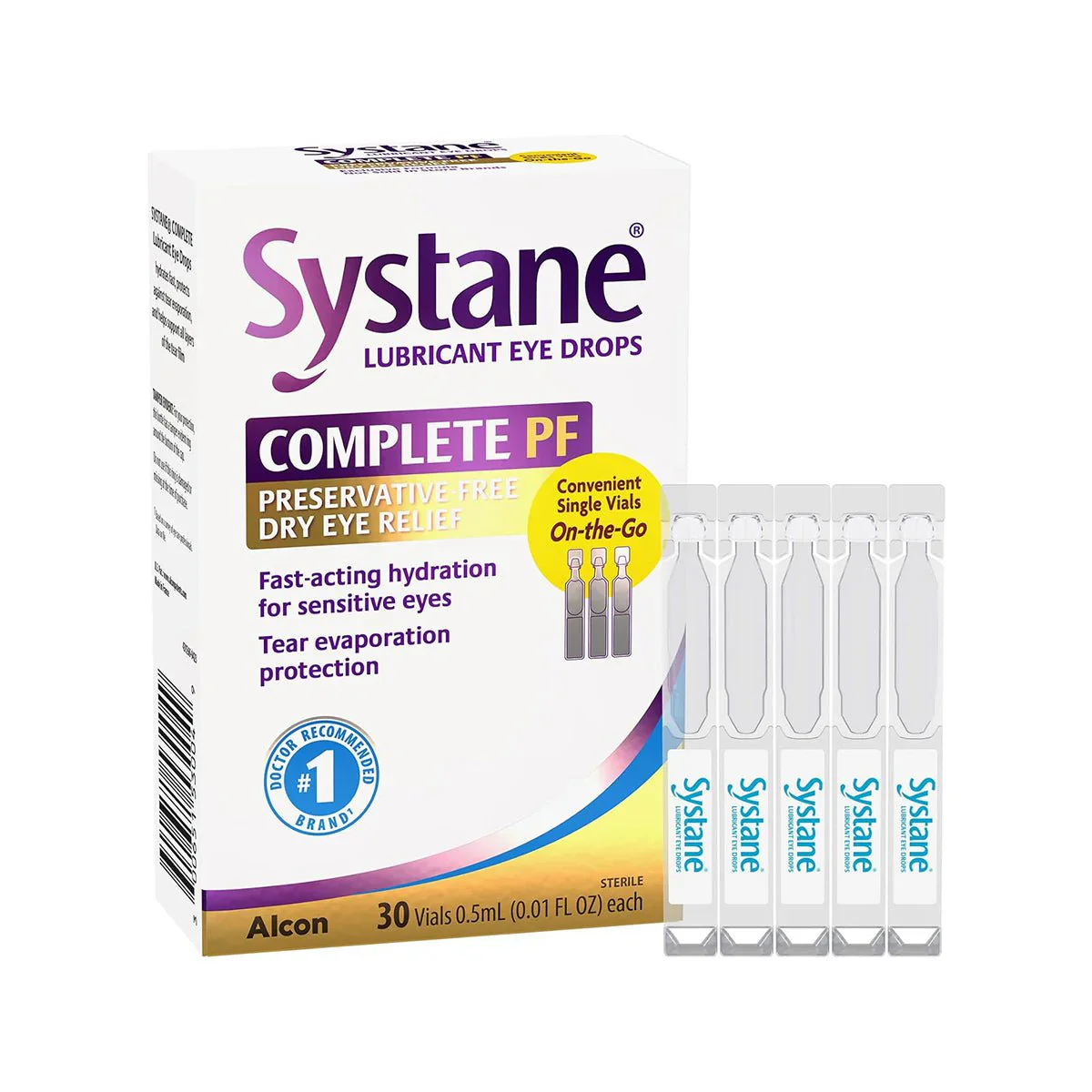
Systane Complete preservative-free, 30 vials
Single-use vials travel well and keep a set at the desk, in the car, and in a bag without worrying about how long a bottle has been open.
View product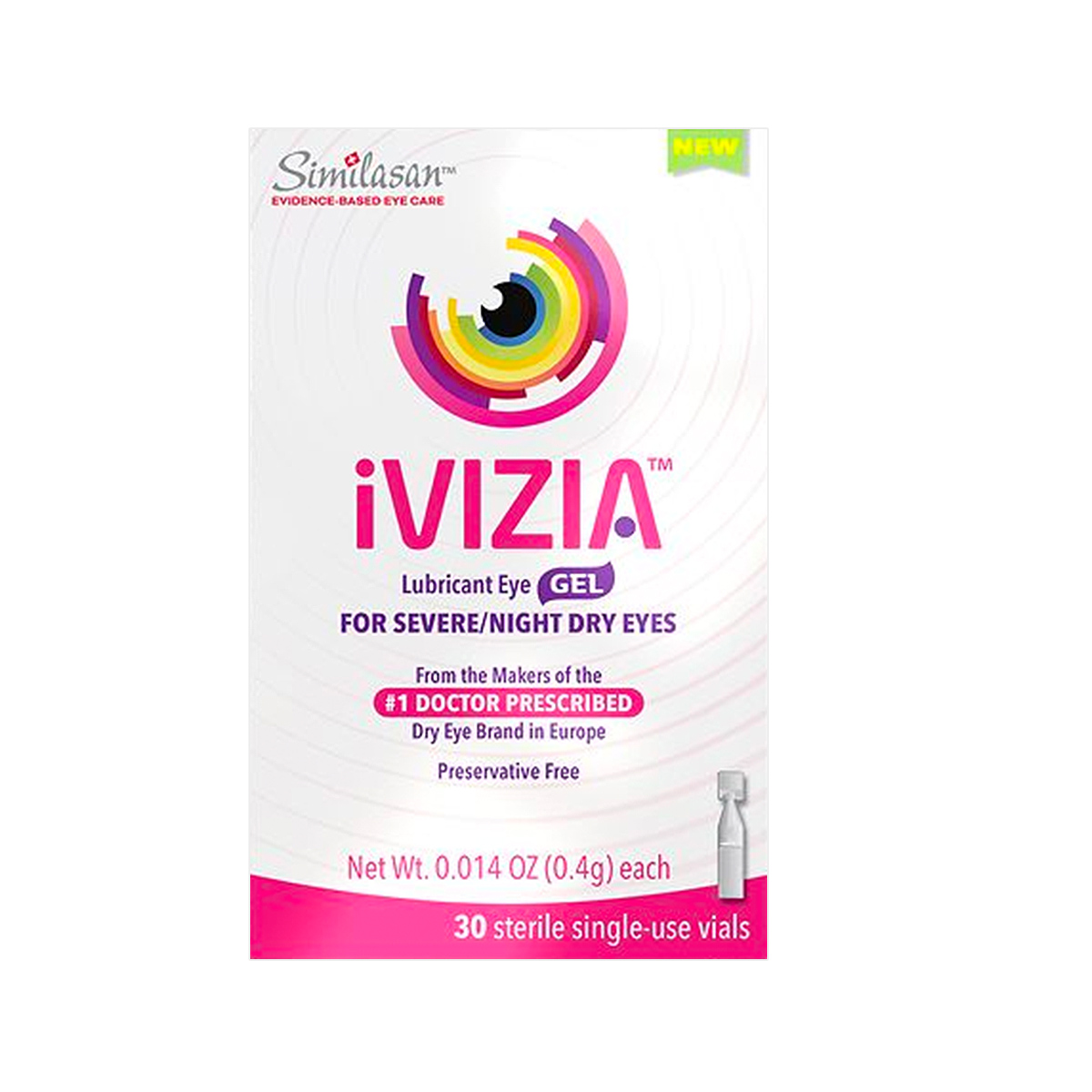
iVIZIA lubricant eye gel, nighttime, 30 vials
A thicker gel stays on the surface longer, which is the point overnight. Designed to help relieve the dryness that shows up as morning burning.
View productOne thing worth getting right
Drops work best used before the burn, not after. If your eyes reliably start burning around 3pm, dose at 11am and 2pm rather than waiting for the signal. Treating the symptom once it arrives means the surface has already been dry for a while, and it takes longer to settle.
When to stop self-treating and book an exam
An in-person exam can separate dryness from lid disease from allergy in a few minutes, which is difficult to do from symptoms alone. Book a visit if any of the following apply.
- Two weeks of consistent, scheduled drops have not changed anything.
- Burning comes with light sensitivity, or with blurred vision that does not clear when you blink.
- There is colored discharge, or your lids are stuck together on waking.
- You feel real pain rather than irritation.
- Symptoms started after an injury, a chemical splash, or a new prescription medication.
Contact lens wearers with pain and light sensitivity should remove their lenses and be seen the same day.
This article is for general education and is not medical advice. It does not replace an examination by a licensed eye care professional, and it cannot account for your individual history. If you have eye pain, sudden vision changes, light sensitivity, or discharge, seek care promptly.
All trademarks are the property of their respective owners.
Common questions
Why do my eyes burn even though they water constantly?
Watering is often the response to the problem rather than proof that there is no problem. When the surface is dry or irritated, the gland that makes the watery portion of tears can release a flood of low-quality tears that run off the lid instead of coating the eye. The surface stays exposed, so the burning continues while your face is wet.
How long should I try drops before I decide they are not working?
Two weeks of consistent, scheduled use is a fair trial. Consistent is the key word. Using a drop twice on a bad day and then forgetting for three days does not tell you anything. If you have genuinely dosed on schedule for two weeks with no improvement, that is useful information to bring to an exam.
Are redness-relief drops a reasonable choice for burning?
Generally no. Those products work by narrowing the blood vessels in the white of the eye, which changes how the eye looks without addressing why it burns. With regular use, many people notice the redness returns more strongly between doses. If your goal is comfort rather than appearance, a lubricating drop is the better starting point.
Could my contact lenses be causing this?
They can contribute. A lens sits within the tear film and both disrupts and draws on it, so a marginal tear film often becomes a symptomatic one once lenses go in. Before changing products, try shortening wear time by a few hours and see whether the burn shifts. If it does, the lens or the wearing schedule is worth discussing at your next visit.
Do I need to keep using drops once the burning stops?
Usually yes, at least for a while. Burning tends to settle before the surface has fully recovered, so stopping the moment you feel better is the most common reason symptoms return within a week or two. Taper rather than stop: keep the same schedule for a further two weeks, then reduce gradually and see whether the burning stays away.
Does it matter what time of day I use my drops?
It matters more than most people expect. Drops used before symptoms arrive generally outperform the same drops used once burning has set in, because you are keeping the tear film stable rather than trying to rescue it. If your burning is predictable, dose ahead of the trigger rather than in response to it.
Can eye makeup or lash treatments make burning worse?
Yes, particularly liner applied along the inner lash line, which sits directly over the openings of the oil glands in the lid margin. Those glands supply the oily layer that slows tear evaporation. Adhesives and removers used with lash extensions can also irritate the lid margin. Moving liner outside the lash line is a low-cost change to try first.
What actually happens at a dry eye visit?
Expect a look at the surface of the eye and the lid margins under magnification, often with a dye that highlights dry or damaged areas. Many practices also measure how quickly your tear film breaks up and check whether the oil glands in the lids are working. It is worth arriving with a note of when your burning is worst, since the timing genuinely helps narrow the cause.
When is burning something to be seen for urgently?
Treat it as urgent if burning comes with real pain rather than irritation, vision that is blurred and does not clear with blinking, marked sensitivity to light, colored discharge, or if it started after an injury or a chemical splash. Contact lens wearers with pain and light sensitivity should remove the lenses and be seen the same day.
Start with the simple version
Pick one preservative-free drop, use it on a schedule for two weeks, and fix the one environmental trigger you already suspect. If that does not do it, get examined.
Shop eye drops